
How to Create an AI Influencer for Your Brand (Step-by-Step, 2026)
 10 min read
An AI influencer is a virtual person, generated with AI, who posts content, presents products and talks to an audience like a human creator would. For a brand, it means a spokesperson you own outright: always available, always on-brand, and able to appear in a hundred videos a month without a single shoot.
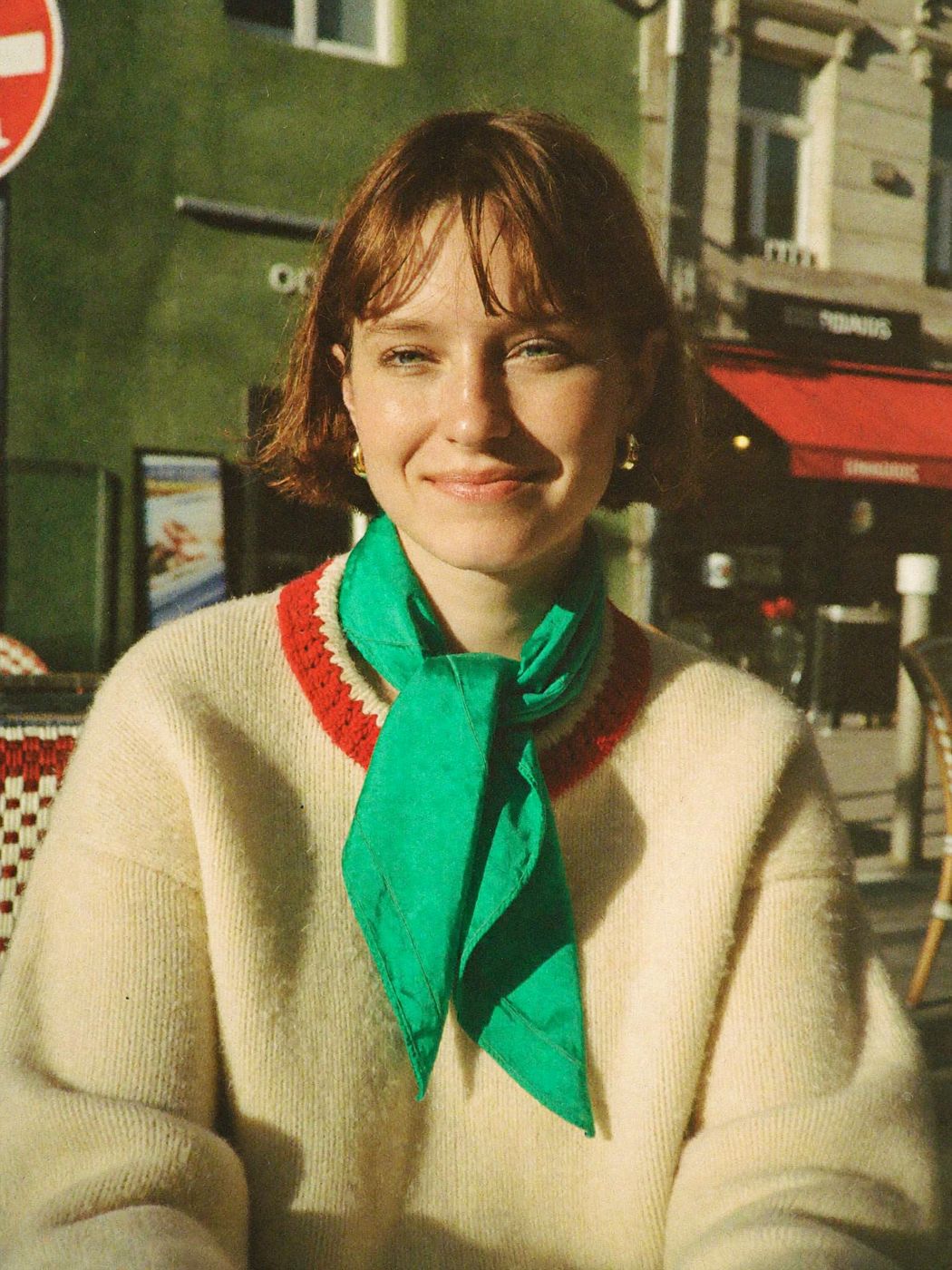
This guide walks through how to create one for your brand, step by step: the persona, the face, keeping that face consistent, the voice, the videos, the accounts and the disclosure rules. Every image and video in this article shows Juno, a demo AI influencer we built for this guide.
Quick answer: define what the influencer is for, write the persona, generate a base portrait, lock the identity with a character sheet and reference-based generation, design a voice, animate talking videos, then publish with clear AI disclosure. Doing it yourself costs roughly $50 to $150 a month in tools, plus a lot of time. The hard part is not generating one good image; it's keeping the same person across hundreds of them.
Step 1: Decide what the influencer is for
Before designing a face, decide the job. The answer changes everything else: the look, the tone, the formats and how much content you need.
| Goal | What the influencer does | Content needed |
|---|---|---|
| Paid ads | Presents the product in UGC-style videos: reviews, demos, before/after | Many short videos, several hooks each |
| Organic account | Runs its own Instagram or TikTok with a consistent lifestyle | Daily posts, stories, a recognisable world |
| Brand ambassador | Fronts launches, product pages, emails and events | Fewer, more polished assets |
| Multilingual spokesperson | Explains the product in several languages and markets | The same script in every language |
Most brands start with paid ads: it's where an AI influencer pays off fastest, because a single persona can front dozens of ad variations a week. For what that looks like in practice, see our UGC ad examples.
Step 2: Write the persona
A believable influencer is a character, not a face. Write a one-page persona before generating anything:
- Identity: name, age, city, job or lifestyle, what they care about.
- Fit with your customer: they should look and live like the people you sell to, or like someone those people trust.
- Voice: how they talk. Casual or expert, funny or calm, which words they would never use.
- Visual signature: two or three details that make them instantly recognisable. For Juno: a copper bob with bangs, freckles and a green scarf.
- Boundaries: topics they never touch, claims they never make.
Step 3: Create the face
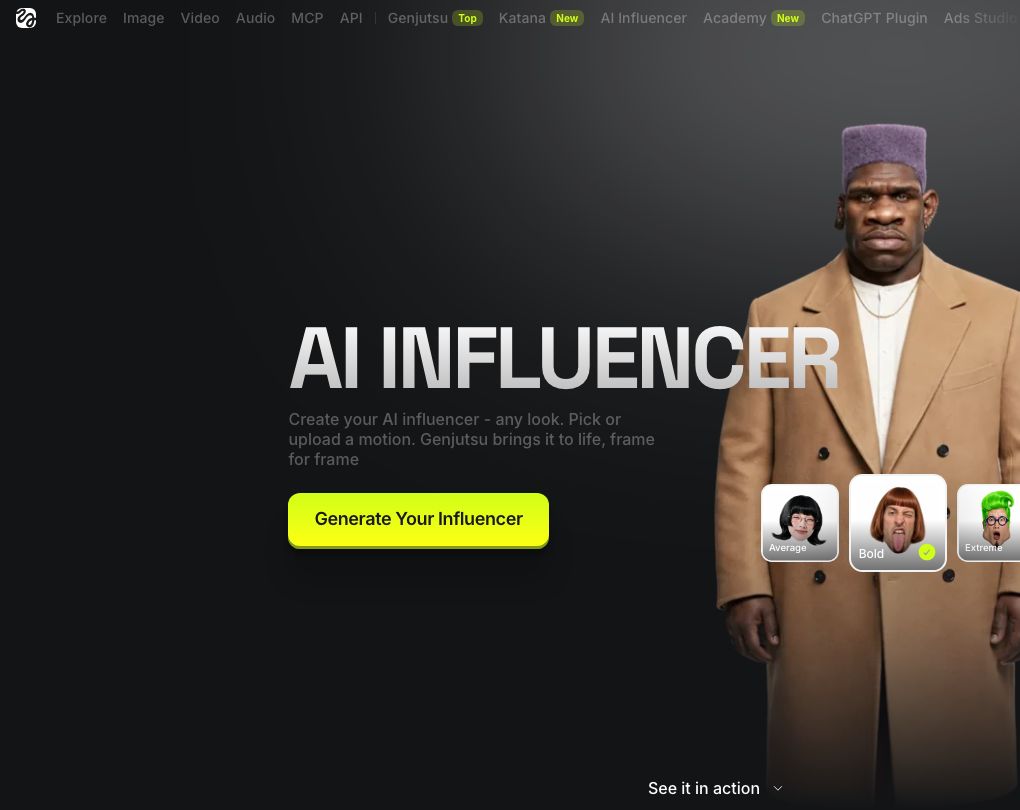
Generate a base portrait with an image model built for realistic people, such as Higgsfield Soul, Midjourney or FLUX. Describe the visual signature precisely, ask for natural skin texture and real light, and generate several options. Pick one face and stop iterating: this portrait becomes the reference for everything that follows.
Step 4: Lock the identity (the hard part)
Generating one good image is easy. Generating the same person in a bathroom, a park and a kitchen, with the same face, is the real work. Two techniques make it possible:
- A character sheet: the same person from several angles and with several expressions, used as a reference for every new image.
- Reference-based generation: tools that take a reference image and keep the identity, such as Higgsfield Soul ID, Midjourney's Omni Reference, FLUX with image references, or OpenArt's consistent characters.
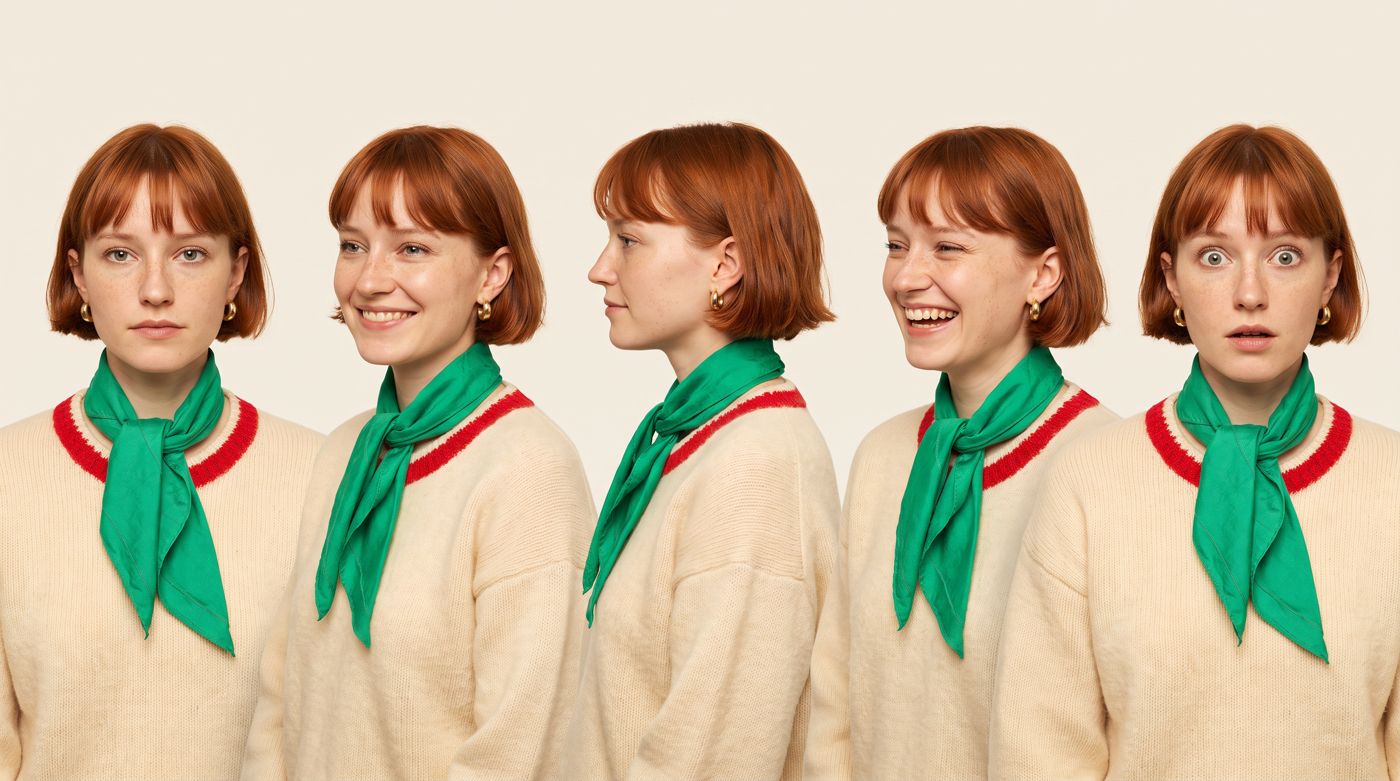
Then build a content library: the same person in the scenes your customers recognise. Check every image against the reference. If the jawline, eye colour or hairline drifts, regenerate. Audiences notice inconsistency faster than they notice AI.



Step 5: Give them a voice and make them talk
A still image builds an account; a talking video sells. Two pieces are needed:
- The voice: design one from a text description with a tool like ElevenLabs Voice Design, then reuse it everywhere. A consistent voice matters as much as a consistent face.
- The video: animate the influencer from an image with a video model such as Veo 3.1, Kling or Seedance, or use a talking-avatar tool like HeyGen for scripted, face-to-camera explainers.
Script these videos like real creator content: a hook in the first two seconds, one idea, a natural tone. The same rules as any AI video ad apply.
Step 6: Set up the accounts and disclose
Whether the influencer posts on its own account or only appears in your ads, label it as AI. It's what platforms and regulators expect, and hiding it is what creates backlash.
- United States: the FTC's 2023 Endorsement Guides define an endorser as anyone or anything that appears to be a person, and the FTC confirmed this covers virtual influencers. Paid relationships must be disclosed.
- European Union: since 2 August 2026, Article 50 of the EU AI Act requires disclosing AI-generated or manipulated content that looks real (deepfakes).
- France: a 2023 law requires the mention « Images virtuelles » on influencer content showing an AI-generated face or body.
- Platforms: Meta shows an "AI info" label, TikTok requires creators to label realistic AI content, and YouTube asks for disclosure of realistic synthetic content.
In practice: say "AI-generated" or "virtual creator" in the bio, use each platform's AI label, and never let the influencer pretend to be a real customer.
Step 7: Publish, test and scale
Start with a small batch: five to ten videos built around different hooks, run as ads or posted on the account. Keep what works, then produce variations of the winners. The advantage of an AI influencer shows up here: a new angle costs a new script, not a new shoot.
What it costs to do it yourself
| Tool | What it's for | Entry price |
|---|---|---|
| Higgsfield | Realistic people, identity reference, AI influencer tools | From about $19/mo (annual) |
| Midjourney | Images with character reference | From $10/mo |
| OpenArt | Consistent characters | From $14/mo |
| ElevenLabs | Voice design (commercial licence) | From $6/mo |
| HeyGen | Talking avatar videos | From $29/mo |
| Veo 3.1, Kling, Seedance | Animated, realistic video | Subscriptions or credits |
Prices from each tool's pricing page in October 2026. Expect $50 to $150 a month for a working stack, plus the real cost: the hours spent on prompting, checking consistency, scripting and editing. Our comparison of AI video generators covers the video models in more detail.
Mistakes that kill AI influencers
- Drifting identity: a slightly different face in every post breaks trust instantly.
- Too perfect: flawless skin, perfect light and no imperfections look like an ad, not a person.
- Hiding the AI: brands that slipped AI models into ads without clear disclosure, like Guess in a 2025 print campaign, faced public backlash.
- No personality: a pretty face with nothing to say gets no engagement. The persona is the product.
- One-off production: an influencer needs a steady stream of content. Plan the volume before you start.
Build it yourself or have it built?
Building it yourself makes sense if you have time, enjoy the tools and need a handful of assets. Having it built makes sense when you want a daily presence without hiring a team. That's what our AI influencer agency does: we design the persona, build the face and voice, set up the accounts and publish 2 to 3 times a day, for $700 per influencer per month.
Want an AI influencer built for your brand?
EditClub designs and runs brand-owned AI influencers: persona, consistent face, voice, accounts and 2 to 3 posts a day each, for $700 per influencer per month. Run one influencer or a network of dozens.
See the AI influencer offer